
线性数据结构
第一章:栈
一、是什么
栈(Stack)是线性的数据结构,也是最基本的数据结构。特点:
- FILO:first in last out,先进后出,最先进入栈的元素必须等到所有后进入的元素出栈之后才能被移除。
- LIFO:last in first out,后进先出,新元素总是被放到栈顶,元素的访问和移除也始终发生在栈顶。
- 栈的大小:栈的大小通常是动态的,它可以根据需要增长或缩小(取决于栈的实现,栈可以是基于数组或链表的)。
栈主要支持以下几种基本操作:
- push:将一个元素添加到栈的顶端。
- pop:移除并返回栈顶元素。
- peek(或 top):返回栈顶元素但不移除它。
- isEmpty:检查栈是否为空。
- size:返回栈中元素的数量。
应用场景:历史记录、撤销操作 ……
二、代码实现
1. 数组版
1)类型定义
因为每个数据结构都有一些相同的操作,所有把这些通用的操作抽取出来。
export default interface IList<T> {
  // peek
  peek(): T | undefined
  // 判断是否为空
  isEmpty(): boolean
  // 元素的个数
  size(): number
}定义栈特有的操作。
import IList from "./IList"

// 定义栈的结构
interface IStack<T> extends IList<T> {
  push(element: T): void
  pop(): T | undefined
}

export default IStack2)实现栈
import IStack from "./IStack"

// 封装一个栈: TypeScript => AnyScript
class ArrayStack<T> implements IStack<T> {
  // 定义一个数组/链表, 用于存储元素
  private data: T[] = []

  // 实现栈中相关的操作方法
  // push方法: 将一个元素压入到栈中
  push(...elements: T[]): void {
    this.data.push(...elements)
  }

  // pop方法: 将栈顶的元素弹出栈(返回出去, 并且从栈顶移除掉)
  pop(): T | undefined {
    return this.data.pop()
  }

  // peek方法: 看一眼栈顶元素, 但是不进行任何的操作
  peek(): T | undefined {
    return this.isEmpty() ? undefined : this.data[this.data.length - 1]
  }

  // isEmpty: 判断栈是否为空
  isEmpty(): boolean {
    return this.data.length === 0
  }

  // 返回栈的数据个数
  size(): number {
    return this.data.length
  }
}

export default ArrayStack2. 代码实现 - 链表
略。
三、思维训练
1. 十进制转二进制
import ArrayStack from "./ArrayStack"

function decimalToBinary(decimal: number): string {
  // 1.创建一个栈, 用于存放余数
  const stack = new ArrayStack<number>()

  // 2.使用循环:
  // while: 不确定次数, 只知道循环结束跳转
  // for: 知道循环的次数时
  while (decimal > 0) {
    const result = decimal % 2
    stack.push(result)

    decimal = Math.floor(decimal / 2)
  }

  // 3.所有的余数都已经放在stack中, 以此取出即可
  let binary = ''
  while (!stack.isEmpty()) {
    binary += stack.pop()
  }

  return binary
}2. 有效的括号
import ArrayStack from "./ArrayStack"

function isValid(s: string): boolean {
  // 1.创建栈结构
  const stack: string[] = []

  // 2.遍历s中的所有的括号
  for (let i = 0; i < s.length; i++) {
    const c = s[i]
    switch (c) {
      case "(":
        stack.push(")")
        break
      case "{":
        stack.push("}")
        break
      case "[":
        stack.push("]")
        break
      default:
        if (c !== stack.pop()) return false
        break
    }
  }

  return stack.length === 0
}第二章:队列
一、普通队列
1. 是什么
队列结构也是一种逻辑结构,它遵循先进先出(FIFO, First In First Out)的原则。队列中的元素总是从队列的前端(称为“队首”)被移除,而新的元素则被添加到队列的后端(称为“队尾”)。因此,第一个进入队列的元素会最先被移除,类似于排队等候的场景。
队列结构特点
- 先进先出(FIFO):元素会按照顺序被处理,第一个进入队列的元素最先被移除。
- 队首和队尾:元素从队尾添加进入,从队首被移除。
- 动态大小。
队列的基本操作
队列的基本操作包括以下几种:
- enqueue(入队):添加一个元素到队尾。
- dequeue(出队):移除并返回队首的元素。
- peek(或 front):返回队首的元素,但是不移除。
- back:返回队尾的元素,但是不移除。
- isEmpty:是否为空。
- size:返回队列中元素的数量。
应用场景:事件循环、动画队列、缓存系统 ……
2. 代码实现
1)数组版
[1] 类型定义
import IList from "./IList"

interface IQueue<T> extends IList<T> {
  // 入队方法
  enqueue(element: T): void
  // 出队方法
  dequeue(): T | undefined
}

export default IQueue[2] 编写 ArrayQueue
import IQueue from "./IQueue"

class ArrayQueue<T> implements IQueue<T> {
  // 内部是通过数组(链表)保存
  private data: T[] = []

  enqueue(...elements: T[]): void {
    this.data.push(...elements)
  }

  dequeue(): T | undefined {
    return this.data.shift()
  }

  peek(): T | undefined {
    return this.isEmpty()? undefined : this.data[0]
  }

  back(): T | undefined {
    return this.isEmpty()? undefined : this.data[this.size() - 1];
  }

  isEmpty(): boolean {
    return this.data.length === 0
  }

  size(): number {
    return this.data.length
  }
}

export default ArrayQueue2)链表版
略。
3. 思维训练
二、循环队列
1. 是什么
循环队列是一种利用固定大小的数组实现队列操作的数据结构,但它采用了“环形”思想,使得数组的末尾与开头相连,从而充分利用了所有存储空间。
普通队列与循环队列的差异
- 普通队列:使用数组来实现,随着元素不断出队,数组前面部分就空闲了(特别是像 Java、C++ 这一类有标准数组数据结构的语言)。当然,可以将后面的元素往前面移动,但是这里又涉及到了移动相关的操作。
- 循环队列:利用环形结构,队尾到达数组末尾之后,新的入队操作会自动写入到数组起始的位置。
循环队列特点
固定容量与环形结构
- 固定容量。
- 环形思想:实际上都是通过模运算来计算新入队的元素的下标位置。
指针管理:通常使用两个变量:
队头指针(front):指向队列的第一个元素。
元素计数(rear/count):记录当前队列有多少个元素,方便后面做模运算。
模运算,使得指针在数组边界“循环”,避免了普通队列中出队后前部空间无法再利用的问题。
高效操作。
基本操作
队列的基本操作包括以下几种:
- enqueue(入队):添加一个元素到队尾。
- dequeue(出队):移除并返回队首的元素。
- peek(或 front):返回队首的元素,但是不移除。
- back:返回队尾的元素,但是不移除。
- isEmpty:是否为空。
- size:返回队列中元素的数量。
- isFull:是否存满。
2. 实现思路
假设有一个大小为 5 的队列,我们依次给对队列执行以下操作:
1)普通队列
基于固定数组,未使用循环策略:
入队操作:将元素 A、B、C 依次入队
[A, B, C, _, _]出队操作:出队两次,把 A 和 B 出队
[_, _, C, _, _]现在随着 A 和 B 的出队,前面两个位置就空出来了
再次入队操作:入队 D 和 E 元素
[_, _, C, D, E]现在这个结构就没有办法再入队新元素,已经满了。除非将后面的元素全部往前面移动:
[C, D, E, _, _]
2)循环队列
同样大小为 5 的循环队列,进行相同的操作:
入队操作:将元素 A、B、C 依次入队
[A, B, C, _, _]- frontIndex:0
- count:3
- maxSize:5
出队操作:出队两次,把 A 和 B 出队
[_, _, C, _, _]这里就会更新队首指针:
新队首指针 = (旧队首指针 + 1) % maxSize- A 元素出队的时候:新队首指针 = (0 + 1) % 5 = 1
- B 元素出队的时候:新队首指针 = (1 + 1) % 5 = 2
再次入队操作:之后新元素入队,放入位置的计算公式
(队首指针 + count) % maxSize新元素 D 入队:(2 + 1) % 5 = 3
[_, _, C, D, _]- frontIndex:0
- count : 2
新元素 E 入队:(2 + 2) % 5 = 4
[_, _, C, D, E]- count:3
新元素 F 入队:(2 + 3) % 5 = 0
[F, _, C, D, E]- count: 4
新元素 G 入队:(2 + 4) % 5 = 1
[F, G, C, D, E]- count: 5
通过循环队列这种计算方式,就不需要将后面的元素全部往前面移动,可以通过模运算计算出每次新元素应该入队的正确位置。
3)代码实现
class CircularQueue {
  constructor(maxSize = 10){
    this.maxSize = maxSize;
    this.queue = new Array(maxSize);
    // 队首指针
    this.frontIndex = 0;
    // 队列元素计数
    this.count = 0
  }

  // 一些辅助方法:size、isEmpty、isFull
  size(){
    return this.count;
  }
  isEmpty(){
    return this.count === 0;
  }
  isFull(){
    return this.count === this.maxSize;
  }

  // 新元素入队
  enqueue(item){
    if(this.isFull()){
      // 进入此分支,说明队列已满
      throw new Error("队列已满");
    }

    // 计算新元素应该存储的索引位置
    let index = (this.frontIndex + this.count) % this.maxSize;
    this.queue[index] = item;
    this.count++;
  }

  // 元素出队
  dequeue(){
    if(this.isEmpty()){
      return undefined;
    }
    let item = this.queue[this.frontIndex]; // 取出队首的元素
    this.queue[this.frontIndex] = undefined; // 清除当前队首元素
    this.frontIndex = (this.frontIndex + 1) % this.maxSize; // 更新存储队首位置的变量
    this.count--; // 更新个数
    return item;
  }

  // 获取队首的元素,但是不移除
  peek(){
    return this.isEmpty() ? undefined : this.queue[this.frontIndex];
  }

  // 获取队尾的元素,但是不移除
  // 队尾元素的索引计算公式:(frontIndex + count - 1) % maxSize
  back(){
    if(this.isEmpty()) return undefined;
    let index = (this.frontIndex + this.count - 1) % this.maxSize;
    return this.queue[index];
  }

  clear(){
    // 清空队列,全部还原
    this.queue = new Array(this.maxSize);
    this.frontIndex = 0;
    this.count = 0;
  }

  // 显示当前队列信息 (需要以元素正确的顺序显示)
  print(){
    // 1.当前数组里面的元素  2.元素的正确顺序
    console.log(this.queue);
    for(let i = 0; i < this.count; i++){
      // 计算正确的下标,然后打印出来
      let index = (this.frontIndex + i) % this.maxSize;
      console.log(this.queue[index] + " ");
    }
  }

  // 重写 toString()方法,方便直接打印 CircularQueue 对象的内容
  toString() {
    if (this.isEmpty()) {
      return "";
    }
    let result = []; // 存放队列里面的元素
    // 从 frontIndex 开始,遍历 count 个元素
    for (let i = 0; i < this.count; i++) {
      // 使用模运算获得实际的数组索引
      let index = (this.frontIndex + i) % this.maxSize;
      result.push(this.queue[index]);
    }
    return result.join(",");
  }
}

export default CircularQueue;3. 思维训练
1)击鼓传花游戏
在这个游戏中,孩子们围成一个圆圈,把花尽快的传递给旁边的人。某一时刻传花停止,这个时候花在谁的手里,谁就退出圆圈。重复这个过程,直到只剩下一个孩子就是胜利者。
实现思路
- 使用 CircularQueue 来管理玩家:
- enqueue 添加所有玩家。
- dequeue 移除当前持有花朵的玩家。
- front 获取当前持有花朵的玩家。
- 模拟传递过程:花朵持有者默认是队首元素,让队首元素出队就是在传递花朵(在让队首元素出队前随机等待一段时间)==> 队首元素出队后让其入队。
- 移除淘汰者:在传递停止时,当前持有花朵的玩家被淘汰(dequeue)。
- 循环直到队列中剩下一个玩家:最后一个玩家是胜利者。
const CircularQueue = require("./CircularQueue.js");

/**
 * @param {*} players 玩家列表
 * @param {*} minPass 最小传花次数
 * @param {*} maxPass 最大传花次数
 */
async function hotPotato(players, minPass = 3, maxPass = 8) {

  // 创建一个循环队列
  let queue = new CircularQueue(players.length);
  // 让所有玩家入队
  for(let p of players) {
    queue.enqueue(p);
  }

  console.log("游戏开始!当前的玩家有:", queue.toString());

  // 开始游戏
  while(queue.size() > 1){
    // 继续传花
    // 每次传花的时间长短是不一样的,意味着传花的次数也是不一样的
    let passCount = Math.floor(Math.random() * (maxPass - minPass + 1)) + minPass; // 生成3~8之间的随机数
    console.log("传花次数:", passCount);

    console.log("开始新一轮传花");
    // 开始传递 passCount 次传花
    for(let i = 0; i < passCount; i++) {
      await new Promise((resolve)=>setTimeout(resolve, 500));
      console.log("🎵 鼓声响起 🎵");
      // 当前持花者出队
      let currentHolder = queue.dequeue(); // 从队列的队首取出一个元素
      queue.enqueue(currentHolder); // 将取出的元素再次入队到队尾
      console.log(`🌹 ${currentHolder} 将花递给了 ${queue.front()} 🌹`);
    }
    console.log("本轮传花结束");

    // 从上面的 for 循环出来后,说明传花次数已经达到了 passCount
    // 选出淘汰者,淘汰者就是当前队首的人
    let eliminated = queue.dequeue();
    console.log(`🔴 ${eliminated} 被淘汰了 🔴`);

    // 显示当前队列的情况
    console.log(queue.toString());
  }

  // 如果代码来到这里,说明队列里面只剩下一个人了
  // 游戏结束
  let winner = queue.front(); // 从队列中将胜利者取出
  console.log("游戏结束,胜利者是:", winner);
}

const players = [
  "张三",
  "李四",
  "王五",
  "赵六",
  "孙七",
  "周八",
  "吴九",
  "郑十",
];

hotPotato(players);2)约瑟夫环
function lastRemaining(n: number, m: number) {
  // 1.创建队列
  const queue = new ArrayQueue<number>()

  // 2.将所有的数字加入到队列中
  for (let i = 0; i < n; i++) {
    queue.enqueue(i)
  }

  // 3.判断队列中是否还有数字
  while (queue.size() > 1) {
    for (let i = 1; i < m; i++) {
      queue.enqueue(queue.dequeue()!)
    }
    queue.dequeue()
  }

  return queue.dequeue()!
}三、双端队列
1. 是什么
双端队列,英语为 double-ended queue,简称 deque。这是一种允许在两端(队列的前端和队列的后端)进行插入和删除操作的数据结构。它既能满足队列的先进先出(FIFO)原则,也能实现栈的后进先出(LIFO)操作,因此在实际应用中非常灵活。
现实生活中的例子
想象一个排队购票的场景 —— 通常我们从队尾进入队伍,但在某些情况下,例如一个刚买完票的人需要补充一些信息,可以重新回到队伍前面;又如队伍末尾的人如果赶时间,可以直接离开队伍。
双端队列常见方法
addFront(element):在双端队列的前端添加新的元素。addBack(element):在双端队列后端添加新的元素。removeFront():从双端队列前端移除第一个元素。removeBack():从双端队列后端移除第一个元素。peekFront():返回双端队列前端的第一个元素。peekBack():返回双端队列后端的第一个元素。
2. 代码实现
class Deque {
  constructor(){
    this.frontIndex = 0; // 指向队首元素的索引
    this.backIndex = 0; // 指向队尾元素的下一个可插入的位置
    this.items = {}; // 存储双端队列里面的所有元素
  }

  // 先实现一些辅助方法:size、isEmpty、clear
  size(){
    return this.backIndex - this.frontIndex;
  }
  isEmpty(){
    return this.size() === 0;
  }
  clear(){
    this.items = {};
    this.frontIndex = 0;
    this.backIndex = 0;
  }

  // 添加到前面
  addFront(item){
    // 1. 如果队列为空,那么添加到前端和后端的效果是一样的
    if(this.isEmpty()){
      this.addBack(item);
      return;
    }

    // 2. 如果队列非空,并且 frontIndex > 0
    // 我们可以在 frontIndex - 1 位置添加新的元素
    if(this.frontIndex > 0){
      this.frontIndex--;
      this.items[this.frontIndex] = item;
      return;
    }

    // 3. 如果 frontIndex === 0
    // 我们需要将所有的元素向后面移动,为索引为 0 的位置腾出空间
    for(let i = this.backIndex; i > 0; i--){
      this.items[i] = this.items[i - 1];
    }
    // 更新队尾的索引,因为所有元素都向后移动了
    // 所以 backIndex 需要更新
    this.backIndex++;
    this.frontIndex = 0;
    this.items[this.frontIndex] = item;
  }

  // 添加到后面
  addBack(item){
    this.items[this.backIndex] = item;
    this.backIndex++;
  }

  removeFront(){
    if(this.isEmpty()){
      return undefined;
    }
    // 取出队首的元素
    const result = this.items[this.frontIndex];
    // 需要删除这个元素
    delete this.items[this.frontIndex];
    this.frontIndex++;
    return result;
  }

  removeBack(){
    if(this.isEmpty()){
      return undefined;
    }
    this.backIndex--; // 现在指向队尾元素
    const result = this.items[this.backIndex]; // 取出队尾
    delete this.items[this.backIndex]; // 从对象中移除
    return result;
  }

  peekFront(){
    if(this.isEmpty()){
      return undefined;
    }
    return this.items[this.frontIndex];
  }

  peekBack(){
    if(this.isEmpty()){
      return undefined;
    }
    return this.items[this.backIndex - 1];
  }

  // 返回队列的字符串表示
  toString(){
    if (this.isEmpty()) {
      return '';
    }
    // 先把队首元素作为字符串的起始
    let objString = `${this.items[this.frontIndex]}`;
    // 从队首下一位遍历到队尾
    for (let i = this.frontIndex + 1; i < this.backIndex; i++) {
      objString = `${objString},${this.items[i]}`;
    }
    return objString;
  }
}

export default Deque;3. 思维训练
1)回文检查器
所谓回文,指的是:正反都能读通的单词、词组、数或者一系列字符的序列,例如 madam 或者 racecar。
有不同的算法可以检查一个词组或字符串是否为回文。最简单的方式是将字符串反向排列并检查它与原来的字符是否相同。如果两者相同,那么它就是一个回文。我们也可以用栈来完成,但是利用数据结构来解决这个问题的话,那还是双端队列最简单、最合适。
代码实现
const Deque = require("./Deque.js");

function isPalindrome(str){
  // 防御性处理
  if(str === undefined || str === null || str.length === 0){
    return false;
  }

  // 判断该字符串是否是回文字符串
  const deque = new Deque(); // 先创建一个双端队列
  // 将字符串全部转为小写,并且去除了空格
  const lowerStr = str.toLocaleLowerCase().split(" ").join("");
  let isEuqal = true; // 假设是回文字符串
  let firstChar = null; // 存储前面的字符
  let lastChar = null; // 存储后面的字符
  // 将字符串的每一位入队
  for(let i = 0; i < lowerStr.length; i++){
    deque.addBack(lowerStr.charAt(i));
  }

  while(deque.size() > 1 && isEuqal){
    // 从双端队列的队首取一个字符
    firstChar = deque.removeFront();
    // 从双端队列的队尾取一个字符
    lastChar = deque.removeBack();
    if(firstChar !== lastChar){
      isEuqal = false;
    }
  }

  return isEuqal;
}第三章:链表
在本科教材中,把链表与数组统称为线性表。因此线性表有顺序存储和链式存储之分。
一、是什么
链表与数组的区别
链表也是存储元素的集合,数组在内存中是一段连续的空间,但是链表在内存中是非连续的空间。
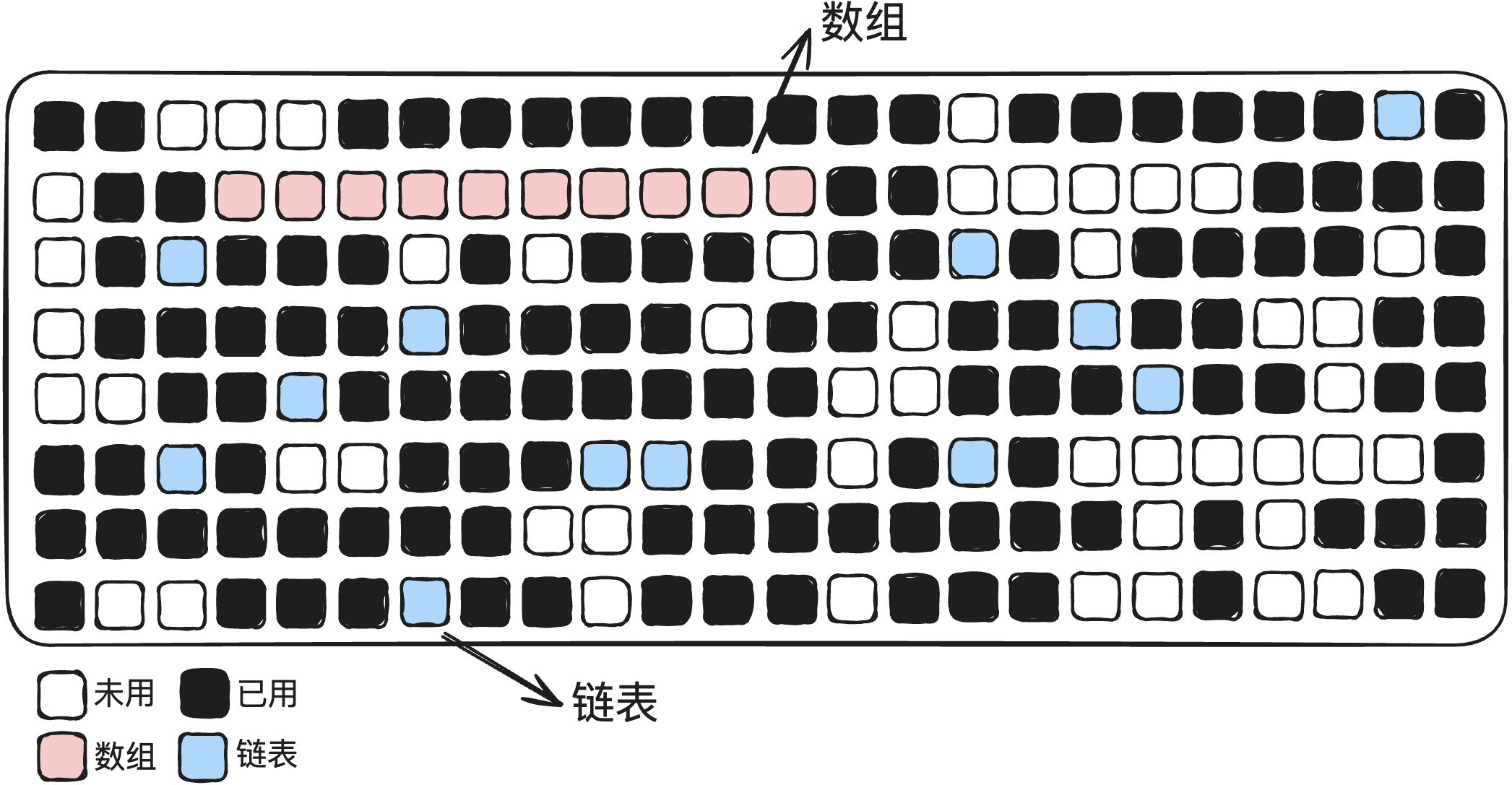
如何存储数据的?
链表是由一个一个节点组成。链表中每个节点是如何找到下一个节点的?
在链表中,每个节点就由两个部分组成:
- 存储具体值。
- 下一个节点的内存地址。
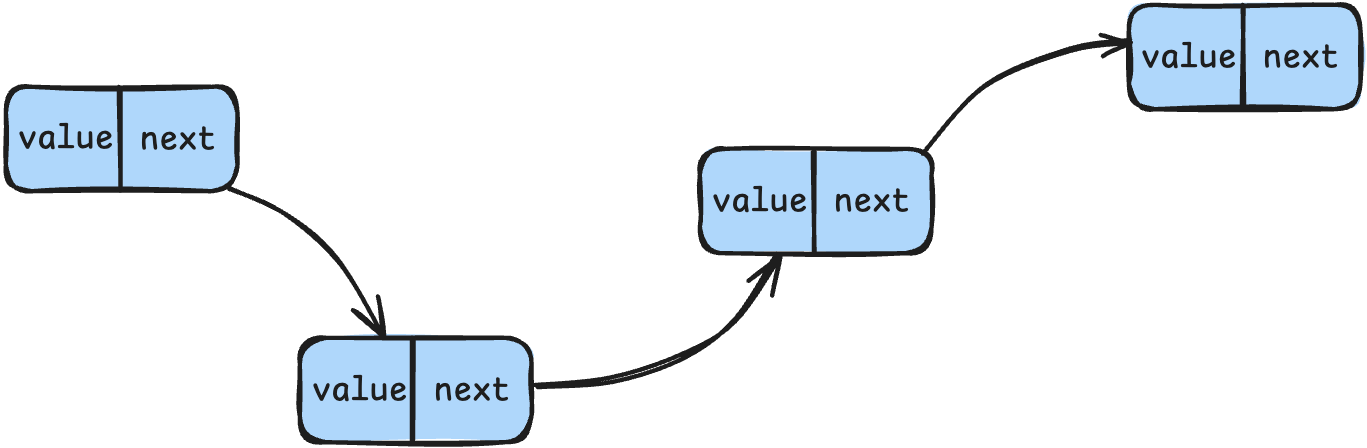
正因为这个特征,链表在查询、新增、删除方面刚好和数组相反。
数组
- 查找:速度很快,因为只需要偏移 xxx 个地址单位就可以获取值。
- 新增和删除:就比较慢,后面所有的元素涉及到后移或者前移。
链表
- 查找:比较麻烦,需要从头节点一个一个进行查找。
- 新增和删除:比较方便,直接修改节点的 next 值(内存地址的指向)就可以了。
并且数组和链表对应的是在内存中真实的存储数据的两种结构方式(物理结构)。
链表常见的形式
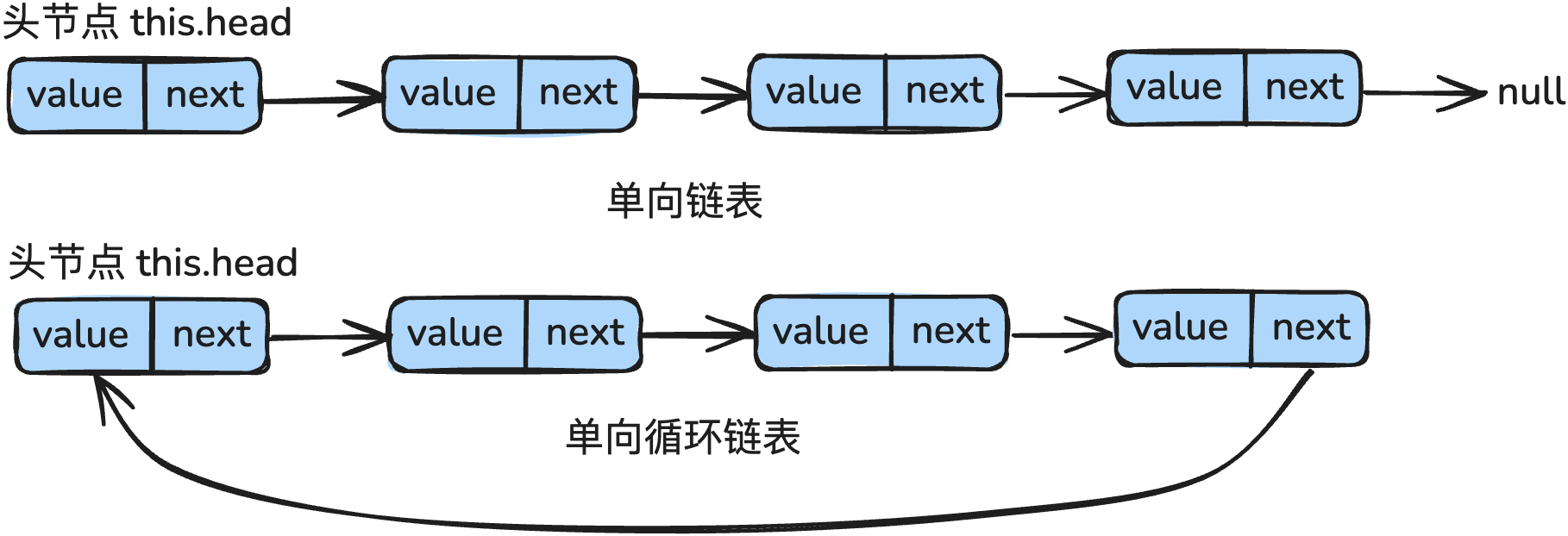
- 单项链表:每个节点包含下一个节点的地址。
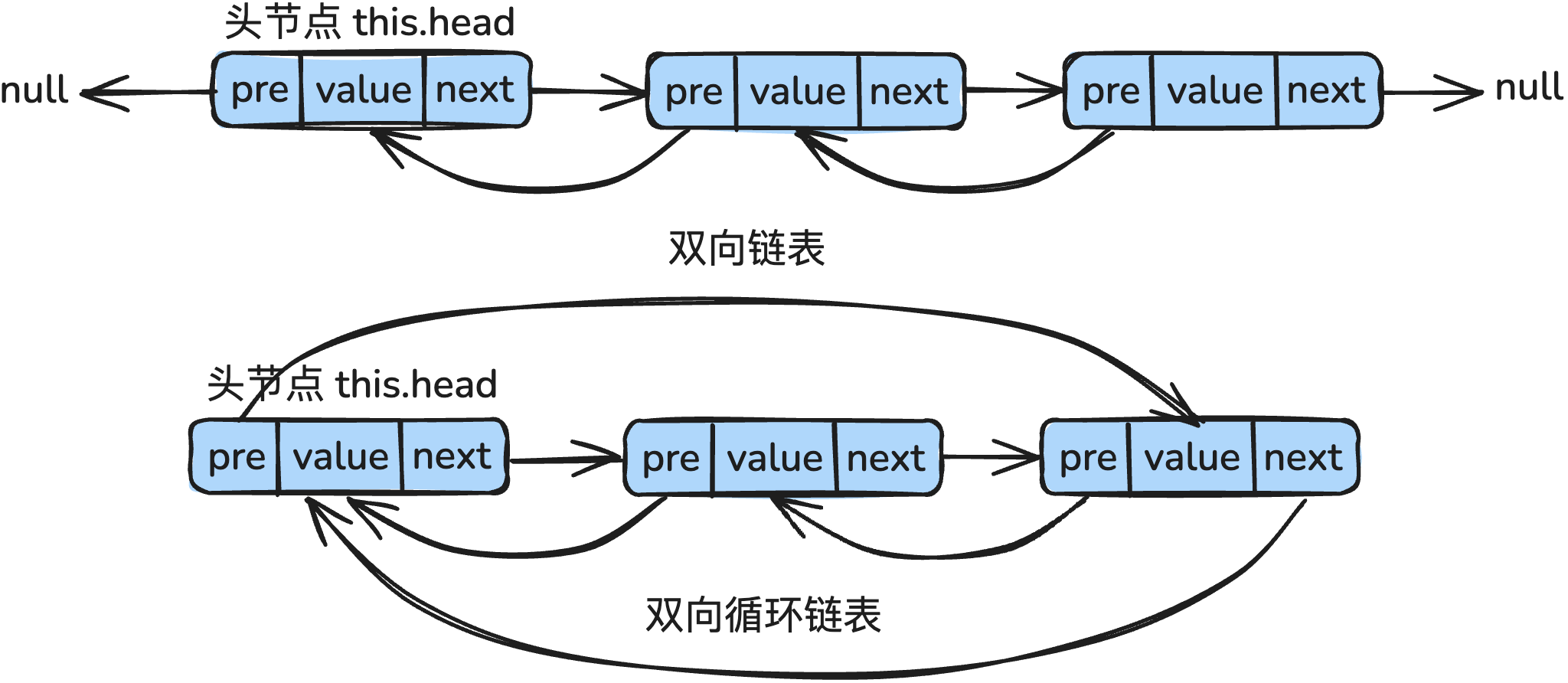
- 双向链表:每个节点会包含上一个节点和下一个节点的地址。
二、单向链表
1. 是什么
单向链表(Singly Linked List)每个元素都包含两个部分:数据部分和指向下一个元素的指针(通常称为 next)。链表的每个节点都包含数据并且指向下一个节点,这样形成了一个链式的结构,方便在任意位置进行插入和删除操作。
单向链表的特点
线性结构:数据元素是线性排列的,但与数组不同的是,链表的元素并不一定在内存中连续存储。
动态大小:链表的大小在运行时可以动态变化,元素的插入和删除不会像数组一样造成内存的重新分配。
插入和删除高效:在已知节点的情况下,插入和删除元素的时间复杂度为
O(1),但如果要访问某个节点时,需要遍历链表。
2. 代码实现
1)类型定义
[1] Node 节点
class Node<T> {
  data: T // 当前节点存储的数据
  next: Node<T> | null = null // 下一个节点的地址
  constructor(value: T) {
    this.value = value
  }
}[2] 链表接口
import IList from "../types/IList"

interface ILinkedList<T> extends IList<T> {
  traverse(): void
  append(value: T): void
  insert(value: T, position: number): boolean
  removeAt(position: number): T | null
  get(positon: number): T | null
  update(value: T, position: number): boolean
  indexOf(value: T): number
  remove(value: T): T | null
}

export default ILinkedList[3] 单向链表框架搭建
// 单向链表类
class LinkedList<T> implements ILinkedList<T> {
  protected head: Node<T> | null = null // 链表的头节点
  protected length: number = 0 // 链表的长度

  get size(): number {
    return this.length
  }

  peek(): T | undefined {
    return this.head?.value
  }

  // 封装私有公共方法
  // 根据position获取到当前的节点 (不是节点的value, 而是获取节点)
  private getNode(position: number): Node<T> | null {
    let index = 0
    let current = this.head
    while (index ++ < position && current) {
      current = current.next
    }
    return current
  }

  // 打印出链表的数据
  traverse(): void {
    // 无外乎就是遍历所有的节点,通过 next 就可以找到下一个节点
    let current = this.head // 一开始从头节点开始
    let result: T[] = [] // 存放所有节点的值
    while(current){
      result.push(current.data)
      current = current.next
    }
    // 出了 while 之后,说明遍历节点结束
    console.log(result.join(" -> ") + " -> null")
  }
}

export {
  Node, LinkedList
}2)链表的新增
新增节点到最后
// 新增一个指定数据的节点
// 放到当前链表的最后
append(data: T){
  // 首先需要生成一个节点
  const newNode = new Node(data)
  // 需要判断新增的这个节点是不是头节点
  if(!this.head){
    // 如果进入此分支,说明当前的单向链表是空的
    // 当前这个节点应该是头节点
    this.head = newNode
  } else {
    // 说明当前的单向链表不是空的
    // 将节点添加到最后
    let current = this.head
    while(current.next){
      current = current.next
    }
    // 退出上面 while 循环的时候,current 是最后一个节点
    current.next = newNode
  }
  this.length++
}新增节点放到指定的位置
// 接收两个参数
// 1. 数据
// 2. 添加到哪个位置
insert(value: T, index: number): boolean {
  // 安全性处理
  if(index < 0 || index > this.length){
    throw new Error("索引值无效")
  }

  const newNode = new Node(data) // 新创建一个节点
  let current = this.head // 一开始 current 指向头节点

  // 下面就是插入的操作。插入仍然是分为是否是头节点位置
  if(index === 0){
    // 在头部插入
    // 插入的新节点会成为新的头节点
    newNode.next = this.head
    this.head = newNode // 更新头节点的值
  } else {
    const previous = this.getNode(position - 1)
    newNode.next = previous!.next
    previous!.next = newNode
  }
  this.length++

  return true
}3)链表的删除
[1] 删除指定位置的节点
重构前
// 接收1个参数,指定的位置
removeAt(index: number): T | null {
  if(index < 0 || index >= this.length){
    throw new Error("索引值无效")
  }
  let current = this.head // 一开始指向头节点
  let previous: Node<T> | null = null // 暂存上一个节点
  if(index === 0){
    // 说明要删除的是头节点
    this.head = current?.next ?? null
  } else {
    // 说明不是头节点,需要遍历到指定的位置
    for(let i = 0; i < index; i++){
      previous = current
      current = current.next
    }
    // 跳出 for 循环的时候,current 是当前要删除的这个节点
    // previous 是当前要删除的节点的前一个节点
    previous!.next = current?.next ?? null
  }
  this.length--
  return current?.data ?? null
}重构后
removeAt(position: number): T | null {
  // 1.越界的判断
  if (position < 0 || position >= this.length) return null

  // 2.判断是否是删除第一个节点
  let current = this.head
  if (position === 0) {
    this.head = current?.next ?? null
  } else {
    // 重构成如下代码
    const previous = this.getNode(position - 1)
    // 找到需要的节点
    previous!.next = previous?.next?.next ?? null
  }

  this.length--

  return current?.value ?? null
}[2] 删除指定数据的节点
重构前
// 接收1个参数
// 要删除的节点对应数据是什么
remove(data: T): T | null {
  let current = this.head; // 一开始指向头节点
  let previous = null; // 暂存上一个节点

  while(current !== null){
    if(current.data === data){
      // 说明当前的这个 current 所对应的节点是要删除的节点
      if(previous === null){
        // 说明删除的节点是头节点
        this.head = current.next;
      } else {
        // 不是头节点
        previous.next = current.next;
      }
      this.length--;
      return current.data;
    }
    previous = current; // 先暂存该节点
    current = current.next; // 跳入下一个节点
  }
}重构后
// 根据值, 获取对应位置的索引
private indexOf(value: T): number {
  // 从第一个节点开始, 向后遍历
  let current = this.head
  let index = 0
  while (current) {
    if (current.value === value) {
      return index
    }
    current = current.next
    index++
  }

  return -1
}

remove(value: T): T | null {
  const index = this.indexOf(value)
  return this.removeAt(index)
}4)根据索引获取节点
重构前
get(position: number): T | null {
  // 越界问题
  if (position < 0 || position >= this.length) return null

  // 查找元素, 并且范围元素
  let index = 0
  let current = this.head
  while (index++ < position && current) {
    current = current.next
  }

  // index === position
  return current?.value ?? null
}重构后
get(position: number): T | null {
  // 越界问题
  if (position < 0 || position >= this.length) return null

  // 查找元素, 并且范围元素
  return this.getNode(position)?.value ?? null
}5)更新某个节点的数据
// 更新方法
update(value: T, position: number): boolean {
  if (position < 0 || position >= this.length) return false
  // 获取对应位置的节点, 直接更新即可
  const currentNode = this.getNode(position)
  currentNode!.value = value
  return true
}6)其他方法
// 判读单链表是否为空的方法
isEmpty() {
  return this.size === 0
}3. 思维训练
1)删除 Node 节点
力扣 (LeetCode) :237. 删除链表中的节点
需求:链表的所有值都是唯一的。给你一个需要删除的节点 node(不是最后一个节点)。你无法访问第一个节点 head。
function deleteNode(node: ListNode | null): void {
  node!.val = node!.next!.val
  node!.next = node!.next!.next
}2)链表的反转
力扣 (LeetCode) :206. 反转链表
class ListNode {
  val: number;
  next: ListNode | null;
  constructor(val?: number, next?: ListNode | null) {
    this.val = val === undefined ? 0 : val;
    this.next = next === undefined ? null : next;
  }
}

export default ListNode[1] 栈
import ListNode from "./ListNode"

function reverseList(head: ListNode | null): ListNode | null {
  // 什么情况下链表不需要处理?
  // 1.head本身为null的情况
  if (head === null) return null
  // 2.只有head一个节点
  if (head.next === null) return head

  // 数组模拟栈结构
  const stack: ListNode[] = []
  let current: ListNode | null = head
  while (current) {
    stack.push(current)
    current = current.next
  }

  // 以此从栈结构中取出元素, 放到一个新的链表中
  const newHead: ListNode = stack.pop()!
  let newHeadCurrent = newHead
  while (stack.length) {
    const node = stack.pop()!
    newHeadCurrent.next = node
    newHeadCurrent = newHeadCurrent.next
  }

  // 注意: 获取到最后一个节点时, 一定要将节点的next置为null
  newHeadCurrent.next = null

  return newHead
};[2] 循环
所需变量:当前所在节点、下一个节点、前一个节点
步骤:
- 保存 next 节点,防止丢失。
- 修改 current.next 节点为 previous 节点。
- 修改 previous 为 current。
- 修改 current 为 next。
reverse(){
  if(!this.head) return; // 如果是空链表,直接返回

  // 没有进入上面的 if,说明链表有东西,进行反转操作
  let current = this.head;
  let previous = null; // 保存上一个节点
  let next = null; // 保存下一个节点

  while(current !== null){
    // 进行反转操作
    next = current.next; // 将当前节点原本的下一个节点暂存
    current.next = previous;
    previous = current;
    current = next;
  }

  // 重置头节点
  this.head = previous;
}

/*
  1 --> 2 --> 3
  3 --> 2 --> 1 --> null
  current: null
  previous: 3
  next: null
  this.head = 3
*/工具函数
function reverseList(head: ListNode | null): ListNode | null {
  // 1.判断节点为null, 或者只要一个节点, 那么直接返回即可
  if (head === null || head.next === null) return head

  // 2.反转链表结构
  let newHead: ListNode | null = null
  while (head) {
    const current: ListNode | null = head.next
    head.next = newHead
    newHead = head
    head = current
  }

  return newHead
};[3] 递归
function reverseList(head: ListNode | null): ListNode | null {
  // 如果使用的是递归, 那么递归必须有结束条件
  if (head === null || head.next === null) return head
  const newHead = reverseList(head?.next ?? null)

  // 完成想要做的操作是在这个位置
  // 第一次来到这里的时候, 是倒数第二个节点
  head.next.next = head
  head.next = null

  return newHead
};3)链表的置换
交换链表里面的两个节点
// 接收参数: 要交换的两个节点的下标,下标是从 0 开始
swap(index1, index2){
  if(index1 === index2) return false; // 如果索引相等,不需要交换
  if(index1 < 0 || index1 >= this.size || index2 < 0 || index2 >= this.size){
    throw new Error("索引无效");
  }

  // 代码走到这一步,说明索引是没有问题的
  // 开始进行交换
  let current = this.head; // 一开始指向头节点
  let counter = 0; // 计数器,靠它找到对应下标的节点
  let node1 = null; // 存储index1对应的节点
  let node2 = null; // 存储 index2 对应的节点

  // 这个while循环主要是寻找节点
  while(current !== null){
    if(counter === index1) node1 = current;
    if(counter === index2) node2 = current;
    if(node1 && node2) break; // 两个节点都找到了,就退出
    current = current.next;
    counter++;
  }

  if(node1 && node2){
    // 交换两个节点的数据
    let temp = node1.data;
    node1.data = node2.data;
    node2.data = temp;
    return true;
  }

  return false;
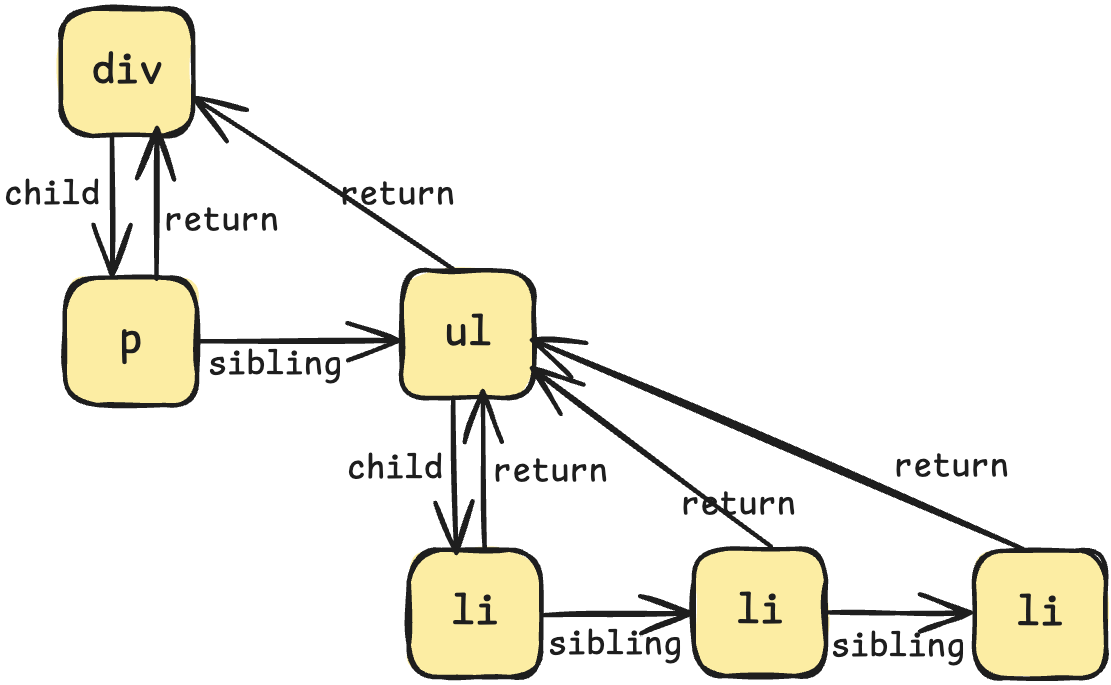
}React 从 16 版本开始,引入了一个 Fiber 的架构,Fiber 就是一个节点,所有的 Fiber 节点就是使用单向链表连接起来的。
function FiberNode(tag, pendingProps, key, mode) {
  // ...

  // 周围的 Fiber Node 通过链表的形式进行关联
  this.return = null; // 指向父节点
  this.child = null; // 指向子节点
  this.sibling = null; // 指向兄弟节点
  this.index = 0;

  // ...
}假设有如下的 html 结构:
<div>
  <p></p>
  <ul>
    <li></li>
    <li></li>
    <li></li>
  </ul>
</div>对应的 Fiber 数链表结构如下图:
4. 附加
因为接下来的单向与双向循环列表需要频繁的操作尾节点,因此在前面代码的基础上添加一个 tail 指针,总是指向链表的最后一个节点。
export default class LinkedList<T> implements ILinkedList<T> {
  protected head: Node<T> | null = null
  protected length: number = 0

  // 新增属性: 总是指向链表的位置
  protected tail: Node<T> | null = null

  size() {
    return this.length
  }

  peek(): T | undefined {
    return this.head?.value
  }

  // 封装私有方法
  // 根据position获取到当前的节点(不是节点的value, 而是获取节点)
  protected getNode(position: number): Node<T> | null {
    let index = 0
    let current = this.head
    while (index ++ < position && current) {
      current = current.next
    }
    return current
  }

  // 判断是否是最后一个节点
  private isTail(node: Node<T>) {
    return this.tail === node
  }

  // 追加节点
  append(value: T) {
    // 1.根据value创建一个新节点
    const newNode = new Node(value)

    // 2.判断this.head是否为null
    if (!this.head) {
      this.head = newNode
    } else {
      this.tail!.next = newNode
    }
    this.tail = newNode

    // 3.size++
    this.length++
  }

  // 遍历链表的方法
  traverse() {
    const values: T[] = []

    let current = this.head
    while (current) {
      values.push(current.value)
      if (this.isTail(current)) { // 已经遍历最后一个
        current = null
      } else { // 不是最后一个节点
        current = current.next
      }
    }

    // 循环链表
    if (this.head && this.tail?.next === this.head) {
      values.push(this.head.value)
    }

    console.log(values.join("->"))
  }

  // 插入方法
  insert(value: T, position: number): boolean {
    // 1.越界的判断
    if (position < 0 || position > this.length) return false

    // 2.根据value创建新的节点
    const newNode = new Node(value)

    // 3.判断是否需要插入头部
    if (position === 0) {
      newNode.next = this.head
      this.head = newNode
    } else {
      const previous = this.getNode(position - 1)
      newNode.next = previous!.next
      previous!.next = newNode

      if (position === this.length) {
        this.tail = newNode
      }
    }
    this.length++

    return true
  }

  // 删除方法
  removeAt(position: number): T | null {
    // 1.越界的判断
    if (position < 0 || position >= this.length) return null

    // 2.判断是否是删除第一个节点
    let current = this.head
    if (position === 0) {
      this.head = current?.next ?? null

      if (this.length === 1) {
        this.tail = null
      }
    } else {
      const previous = this.getNode(position - 1)
      current = previous!.next
      previous!.next = previous?.next?.next ?? null

      if (position === this.length - 1) {
        this.tail = previous
      }
    }

    this.length--

    return current?.value ?? null
  }

  // 获取方法
  get(position: number): T | null {
    // 越界问题
    if (position < 0 || position >= this.length) return null

    // 2.查找元素, 并且范围元素
    return this.getNode(position)?.value ?? null
  }

  // 更新方法
  update(value: T, position: number): boolean {
    if (position < 0 || position >= this.length) return false
    // 获取对应位置的节点, 直接更新即可
    const currentNode = this.getNode(position)
    currentNode!.value = value
    return true
  }

  // 根据值, 获取对应位置的索引
  indexOf(value: T): number {
    // 从第一个节点开始, 向后遍历
    let current = this.head
    let index = 0
    while (current) {
      if (current.value === value) {
        return index
      }

      if (this.isTail(current)) {
        current = null
      } else {
        current = current.next
      }

      index++
    }

    return -1
  }

  // 删除方法: 根据value删除节点
  remove(value: T): T | null {
    const index = this.indexOf(value)
    return this.removeAt(index)
  }

  // 判读单链表是否为空的方法
  isEmpty() {
    return this.length === 0
  }
}三、双向链表
1. 是什么
双向链表:Doubly Linked List
包含两个方向:
- 一个是指向下一个节点的 next 指针
- 另一个是指向上一个节点的 pre 指针
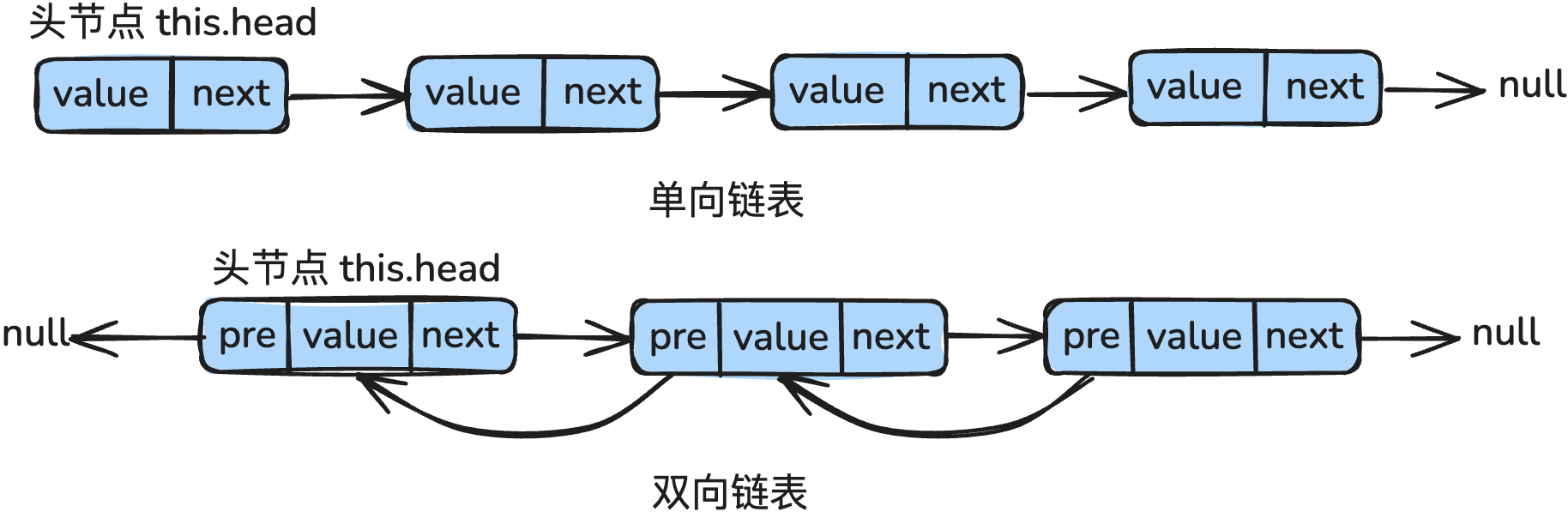
双向链表特点:
每个节点包含 3 个部分
- value:或者叫做 data,具体的数据
- next:下一个节点的指针
- pre:上一个节点的指针
可以双向遍历
插入和删除操作更加的灵活
获取前一个节点的时候,不需要像单向链表一样不断的缓存前一个节点
直接通过 pre 属性就可以拿到上一个节点。
举例:假设要移除 current 这个节点
javascriptcurrent.prev.next = current.next; current.next.prev = current.prev;
相比单向链表,需要更多的内存空间。因为每个节点多了一个 pre 的指针引用。
书写双链表的方法的时候,需要小心谨慎,因为需要同时维护两个指针。
2. 代码实现
1)Node 类型编写
// 普通链表中的 Node 节点类型
export class Node<T> {
value: T // 当前节点存储的数据
next: Node<T> | null = null
constructor(value: T) {
this.value = value
}
}
// 双向链表中的 Node 节点类型
export class DoublyNode<T> extends Node<T> {
prev: DoublyNode<T> | null = null // 上一个节点的指针
next: DoublyNode<T> | null = null // 下一个节点的指针
}2)基本结构搭建
class DoublyLinkedList<T> extends LinkedList<T> {
protected head: DoublyNode<T> | null = null // 双向链表的头节点
protected tail: DoublyNode<T> | null = null // 双向链表的尾节点
// 打印链表
print() {
let current = this.head; // current --> 头节点
let result = []; // 存储节点内容
while (current) {
result.push(current.data);
current = current.next; // 更新节点
}
// 退出上面的while,说明节点已经遍历完毕
console.log(result.join(" <-> "));
}
}
export {
DoublyLinkedList,
};// 测试文件
const { DoublyLinkedList, Node } = require("./DoublyLinkedList");
// 先创建3个节点
const node1 = new Node(1);
const node2 = new Node(2);
const node3 = new Node(3);
// 接下来,将这3个节点串联成一个双向链表
node1.next = node2;
node2.prev = node1;
node2.next = node3;
node3.prev = node2;
// 创建一个 DoublyLinkedList 并将 node1 作为头节点
const dl = new DoublyLinkedList();
dl.head = node1;
dl.tail = node3;
dl.size = 3;
// 打印双向链表
dl.print();3)新增节点
在链表尾部新增一个节点
// 接收一个参数
// 该参数为新的节点的数据
append(value: T): void {
// 生成新的节点
const newNode = new DoublyNode(value);
if(!this.head){
// 进入此分支,说明 this.head 为 null
// this.head 为 null 说明是一个空链表
// 当前就一个节点,头部也是它,尾部也是它
// prev 属性为 null
this.head = newNode;
this.tail = newNode;
} else {
// 说明当前的双向链表是有节点
this.tail!.next = newNode;
// 不能将一个父类的对象, 赋值给一个子类的类型
// 可以将一个子类的对象, 赋值给一个父类的类型(多态)
newNode.prev = this.tail;
this.tail = newNode;
}
// 无论上面进入哪个分支,都是添加
// 长度会增长
this.length++;
}在链表首部新增一个节点
prepend(value: T): void {
const newNode = new DoublyNode(value)
if (!this.head) { // 还没有一个节点, 刚初始化好后
this.head = newNode // 更新头节点
this.tail = newNode
} else {
newNode.next = this.head
this.head.prev = newNode
this.head = newNode
}
this.length++
}在链表指定位置添加节点
// 接收两个参数
// 1. 要插入的下标
// 2. 新节点的数据
insert(value: T, position: number): boolean {
if(position < 0 || position > this.length){
throw new Error("索引值无效");
}
// 没有进入上面的if,说明索引没有问题,接下来开始根据索引进行插入操作
if(position === 0){
// 进入此分支,说明是要插入到头部
this.prepend(value);
} else if(position === this.length){
// 进入此分支,说明是要插入到尾部
this.append(value);
} else {
// 插入到中间
// 这里会涉及到需要找到具体的位置
const newNode = new DoublyNode(value);
const current = this.getNode(position) as DoublyNode<T>;
// 更新各个节点的指向
newNode.prev = current.prev;
newNode.next = current;
current.prev!.next = newNode;
current.prev = newNode;
this.length++;
}
return true;
}4)删除节点
删除指定数据节点
// 接收一个参数
// 要删除的数据节点对应的数据
remove(item){
let current = this.head; // 一开始指向头节点
while(current){
// 这里面就需要去寻找对应数据的那个节点
if(current.data === item){
// 进入此分支,说明找到了要删除的节点
if(current === this.head && current === this.tail){
// 进入此分支,说明整个双向链表只有一个节点
// 将头尾节点都置为空
this.head = null;
this.tail = null;
} else if(current === this.head){
// 说明当前要删除的节点是头节点
this.head = this.head.next;
this.head.prev = null;
} else if(current === this.tail){
// 说明要删除的节点为尾节点
this.tail = this.tail.prev
this.tail.next = null;
} else {
// 说明就是中间节点
current.prev.next = current.next;
current.next.prev = current.prev;
}
// 无论上面进入哪一个分支,都会删除一个节点
this.size--;
return true;
}
current = current.next;
}
return false;
}删除指定索引节点
// 接收一个参数
// 要删除的节点所对应的索引值
removeAt(position: number): T | null {
  if(position < 0 || position >= this.length){
    throw new Error("索引值有误")
  }

  let current = this.head // 先记录头节点
  if(position === 0){
    // 进入此分支,说明删除的是头节点
    if(this.head === this.tail){
      // 说明当前的双链表只有一个节点
      this.head = null
      this.tail = null
    } else {
      this.head = this.head.next
      this.head!.prev = null
    }
  } else if (position === this.length - 1) { // 删除的是最后一个
    current = this.tail
    this.tail = this.tail!.prev
    this.tail!.next = null
  } else { // 删除的是中间的节点
    current = this.getNode(position) as DoublyNode<T>
    current.next!.prev = current.prev
    current.prev!.next = current.next
  }

  this.length--

  return current?.value ?? null
}5)其他方法
- 反转链表
reverse(){
  if(!this.head) return; // 如果是空链表,直接返回

  let current = this.head; // 缓存头节点
  let prev = null; // 用于缓存上一个节点
  let next = null; // 用于缓存下一个节点

  while(current){
    next = current.next;
    current.next = prev;
    current.prev = next;
    prev = current;
    current = next;
  }

  // 更新头节点和尾节点
  this.tail = this.head; // 原来的头变成了尾巴
  this.head = prev; // 然后更新头节点
}- 置换链表
接收两个下标值,将对应下标值的节点的内容进行交换
// 接收2个参数
// 是两个下标值
swap(index1, index2){
  if(index1 === index2) return false; // 如果索引相等,不需要交换
  if(index1 < 0 || index1 >= this.size || index2 < 0 || index2 >= this.size){
    throw new Error("索引值有错误");
  }

  let current = this.head; // 记录头节点
  let counter = 0; //计数器,用于记录索引的,类似于数组的下标
  let node1 = null;
  let node2 = null;

  while(current){
    if(counter === index1) node1 = current;
    if(counter === index2) node2 = current;
    if(node1 && node2) break; // 两个节点都找到了,跳出循环
    current = current.next;
    counter++;
  }

  // 找到了两个节点,接下来进行交换操作
  if(node1 && node2){
    let temp = node1.data;
    node1.data = node2.data;
    node2.data = temp;
    return true;
  }

  return false;
}- 查看长度与是否为空
length(){
  return this.size;
}
isEmpty(){
  return this.size === 0;
}- 遍历链表
允许用户传递一个回调函数,然后对该双向链表所有的节点都应用该回调函数。
类似于数组的 foreach 方法:
const arr = [1, 2, 3];
arr.forEach((item, index) => {
  console.log(item, index);
});
// 接收一个参数
// 该参数是一个回调函数
forEach(fn){
  // 遍历整个链表,将所有的节点扔给这个回调函数
  let current = this.head;
  while(current){
    fn(current);
    current = current.next;
  }
}- 查看节点索引
1000 --> 0
100 --> 7
// 接收一个参数
// 要查找的节点的数据是什么
find(item){
  let current = this.head;
  let counter = 0;
  while(current){
    if(current.data === item){
      // 说明找到了
      return counter;
    }
    current = current.next;
    counter++;
  }
  // 代码走到这儿,说明没有进入过 while 里面的 if
  // 说明没有找到
  return -1;
}四、单向循环链表
循环链表:
- 单向循环链表
- 双向循环链表
单向循环链表是由单链表进化而来的,算是单链表的“儿子”或者称之为分支,所以单链表的那一套结构对于单向循环链表来说完全适用,结构并无较大改变。二者所不同的地方只是在尾结点,所以我们只需要在尾结点和与尾结点相关的操作上下功夫就行了。
需要重构的方法
add方法
js// 新增一个指定数据的节点 // 放到当前链表的最后 add(data) { // 首先需要生成一个节点 const newNode = new Node(data); // 需要判断新增的这个节点是不是头节点 if (!this.head) { // 如果进入此分支,说明当前的单向链表是空的 // 当前这个节点应该是头节点 this.head = newNode; // 这里还需要一个操作,新增的这个节点会变成尾节点,这个尾节点需要指向头部 newNode.next = this.head; } else { // 说明当前的单向链表不是空的 // 将节点添加到最后 let current = this.head; while (current.next !== this.head) { current = current.next; } // 退出上面 while 循环的时候,current 是最后一个节点 current.next = newNode; newNode.next = this.head; } this.size++; }print方法
js// 打印链表数据 print() { // 无外乎就是遍历所有的节点,通过 next 就可以找到下一个节点 let current = this.head; // 一开始从头节点开始 let result = ""; // 存储整个链表拼接出来的结果 if(this.head){ do{ result += `${current.data} -> `; current = current.next; }while(current !== this.head) } result += "null"; console.log(result); }addAt方法
jsaddAt(data, index){ // 安全性处理 if (index < 0 || index > this.size) { throw new Error("索引值无效"); } const newNode = new Node(data); if(!this.head){ // 说明是空链表 newNode.next = newNode; // 形成循环 this.head = newNode; } else if(index === 0){ // 在头部插入,而且链表不为空 // 需要找到最后一个节点,并且让最后一个节点指向当前的新节点(因为新节点成为了新的头部) let last = this.head; // 找到最后一个节点 while(last.next !== this.head){ last = last.next; } newNode.next = this.head; this.head = newNode; last.next = this.head; } else { // 在链表的中间或者尾部插入 let current = this.head; let counter = 0; // 计数器 while(counter < index - 1){ current = current.next; counter++; } // 出了while循环之后,说明找到了插入的位置 newNode.next = current.next; current.next = newNode; } this.size++; }remove方法
jsremove(data){ // 链表为空就返回 null if(!this.head) return null; let current = this.head; let previous = null; do{ if(current.data === data){ // 说明找到了要删除的节点 // 在删除的时候分为两种情况,看删除的节点是不是头节点 if(previous === null){ // 说明当前要删除的节点是头节点 // 这里又要分成两种情况 // 1. 只有一个头节点 // 2. 超过一个节点 if(current.next === this.head){ // 说明只有一个节点 this.head = null; } else { // 说明不止一个节点 // 找到最后一个节点,让它指向当前要删除的节点的下一个节点 let last = this.head; while(last.next !== this.head){ last = last.next; } this.head = current.next; last.next = this.head; } } else { // 说明当前要删除的节点不是头节点 previous.next = current.next; } this.size--; return current.data; } // 继续往下找 previous = current; current = current.next; } while(current !== this.head); }removeAt方法
removeAt(index){ if (index < 0 || index >= this.size) { throw new Error("索引值无效"); } if(!this.head) return null; let current = this.head; // 从头节点出发,寻找要删除的节点 let previous = null; // 暂存上一个节点 if(index === 0){ // 说明要删除的是头节点 // 需要判断是否只有一个节点 if(current.next === this.head){ this.head = null; } else { let last = this.head; // 寻找最后一个节点 while(last.next !== this.head){ last = last.next; } this.head = current.next; // 之前头节点的下一个成为新的头 last.next = this.head; } } else { // 删除的不是头节点 // 这个 for 是在遍历到指定的删除位置 for(let i = 0; i < index; i++){ previous = current; current = current.next; } previous.next = null; previous.next = current.next; current.next = null; } this.size--; return current.data; }reverse方法
reverse(){ // 如果链表为空,或者链表只有一个节点,反转并无意义 if(!this.head || this.head.next === this.head) return; let current = this.head; let previous = null; // 记录前一个节点 let next = null; // 记录后一个节点 do{ // 进行反转操作 next = current.next; // 将当前节点原本的下一个节点暂存 current.next = previous; previous = current; current = next; }while(current !== this.head); // this.head是最后一个节点,previous是头节点 // 因为是循环链表,需要让最后一个节点指向头节点 this.head.next = previous; this.head = previous; // 重置头节点的值 }swap方法
// 接收参数
// 要交换的两个节点的下标,下标是从 0 开始
swap(index1, index2) {
  if (index1 === index2) return false; // 如果索引相等,不需要交换
  if (
    index1 < 0 ||
    index1 >= this.size ||
    index2 < 0 ||
    index2 >= this.size
  ) {
    throw new Error("索引无效");
  }

  // 代码走到这一步,说明索引是没有问题的
  // 开始进行交换
  let current = this.head; // 一开始指向头节点
  let counter = 0; // 计数器,靠它找到对应下标的节点
  let node1 = null; // 存储index1对应的节点
  let node2 = null; // 存储 index2 对应的节点

  // 这个while循环主要是寻找节点
  do {
    if (counter === index1) node1 = current;
    if (counter === index2) node2 = current;
    if (node1 && node2) break; // 两个节点都找到了,就退出
    current = current.next;
    counter++;
  } while (current !== this.head);

  if (node1 && node2) {
    // 交换两个节点的数据
    let temp = node1.data;
    node1.data = node2.data;
    node2.data = temp;
    return true;
  }

  return false;
}
五、双向循环链表
对比普通的双向链表,双向循环链表的尾节点的 next 指向头节点,头节点的 prev 指向尾节点。
add方法
add(item) {
  // 生成新的节点
  const newNode = new Node(item);

  // 判断是否为空链表
  if (!this.head) {
   	// 原本是空链表
    newNode.next = newNode;
    newNode.prev = newNode;
    this.head = newNode;
    this.tail = newNode;
  } else {
    // 说明当前的双向链表是有节点
    newNode.prev = this.tail;
    this.tail.next = newNode;

    newNode.next = this.head; // newNode作为最后一个节点,要指向回头节点
    this.head.prev = newNode;

    this.tail = newNode;
  }

  // 无论上面进入哪个分支,都是添加
  // 长度会增长
  this.size++;
}print方法
print(){
  if(!this.head) return; // 如果链表为空,直接返回

  let current = this.head; // current --> 头节点
  let result = []; // 存储节点的内容

  do{
    result.push(current.data);
    current = current.next;
  }while(current !== this.head);

  console.log(result.join("<->"));
}addAt方法
// 接收两个参数
// 1. 要插入的下标
// 2. 新节点的数据
addAt(index, item) {
  if (index < 0 || index > this.size) {
    throw new Error("索引值无效");
  }

  // 创建新的节点
  const newNode = new Node(item);

  // 没有进入上面的if,说明索引没有问题,接下来开始根据索引进行插入操作
  if (index === 0) {
    if(!this.head){
      // 链表为空,直接插入
      newNode.next = newNode;
      newNode.prev = newNode;
      this.head = newNode;
      this.tail = newNode;
    } else {
      // 说明链表不为空,插入到头部,之前的头部节点就会成为新节点的 next
      newNode.next = this.head;
      newNode.prev = this.tail;
      this.head.prev = newNode;
      this.tail.next = newNode;
      this.head = newNode;
    }
  } else if (index === this.size) {
    // 进入此分支,说明是要插入到尾部
    this.add(item);
  } else {
    // 插入到中间
    // 这里会涉及到需要找到具体的位置
    let current = this.head;
    let counter = 0; // 计数器,用于标注节点的个数,起到一个类似于数组下标的作用
    while (current) {
      if (counter === index) {
        // 更新各个节点的指向
        newNode.prev = current.prev;
        newNode.next = current;
        current.prev.next = newNode;
        current.prev = newNode;
        break;
      }
      // 不停的更新节点
      current = current.next;
      counter++;
    }
  }
  this.size++;
}remove方法
// 接收一个参数
// 要删除的数据节点对应的数据
remove(item) {
  let current = this.head; // 一开始指向头节点

  if(!this.head) return false; // 如果链表为空,直接返回

  do{
    // 这里面就需要去寻找对应数据的那个节点
    if (current.data === item) {
      // 进入此分支,说明找到了要删除的节点
      if (current === this.head && current === this.tail) {
        // 进入此分支,说明整个双向链表只有一个节点
        // 将头尾节点都置为空
        this.head = null;
        this.tail = null;
      } else if (current === this.head) {
        // 说明当前要删除的节点是头节点
        this.head = this.head.next;
        this.head.prev = this.tail;
        this.tail.next = this.head;
      } else if (current === this.tail) {
        // 说明要删除的节点为尾节点
        this.tail = this.tail.prev;
        this.tail.next = this.head;
        this.head.prev = this.tail;
      } else {
        // 说明就是中间节点
        current.prev.next = current.next;
        current.next.prev = current.prev;
      }
      // 无论上面进入哪一个分支,都会删除一个节点
      this.size--;
      return true;
    }
    current = current.next; // 更新节点
  } while(current !== this.head);

  return false;
}removeAt方法
// 接收一个参数
// 要删除的节点所对应的索引值
removeAt(index) {
  if (index < 0 || index >= this.size) {
    throw new Error("索引值有误");
  }

  let current = this.head; // 先记录头节点
  let counter = 0; // 计数器,对下标进行计数

  if (index === 0) {
    // 进入此分支,说明删除的是头节点
    if (this.head === this.tail) {
      // 说明当前的双链表只有一个节点
      this.head = null;
      this.tail = null;
    } else {
      this.head = this.head.next;
      this.head.prev = this.tail;
      this.tail.next = this.head;
    }
  } else {
    // 说明删除的是后面的节点
    do{
      if (counter === index) {
        // 找到要删除的节点的时候,会进入该分支
        if (current === this.tail) {
          // 说明要删除的节点是尾节点
          this.tail = current.prev; // 更新尾节点
          this.tail.next = this.head;
          this.head.prev = this.tail;
        } else {
          // 说明就是中间的节点
          current.prev.next = current.next;
          current.next.prev = current.prev;
        }
        break;
      }
      // 不断的更新节点
      current = current.next;
      counter++;
    } while(current !== this.head);
  }
  this.size--;
}reverse方法
reverse() {
  if (!this.head) return; // 如果是空链表,直接返回

  let current = this.head; // 缓存头节点
  let prev = null; // 用于缓存上一个节点
  let next = null; // 用于缓存下一个节点

  do{
    next = current.next;
    current.next = prev;
    current.prev = next;
    prev = current;
    current = next;
  }while(current !== this.head);

  // 更新头节点和尾节点
  this.tail = this.head; // 原来的头变成了尾巴
  this.head = prev; // 然后更新头节点
  this.tail.next = this.head; // 更新尾节点的next指向新的头节点,保持循环结构
  this.head.prev = this.tail; // 更新头节点的prev指向新的尾节点,保持循环结构
}swap方法
// 接收2个参数
// 是两个下标值
swap(index1, index2) {
  if (index1 === index2) return false; // 如果索引相等,不需要交换
  if (
    index1 < 0 ||
    index1 >= this.size ||
    index2 < 0 ||
    index2 >= this.size
  ) {
    throw new Error("索引值有错误");
  }

  let current = this.head; // 记录头节点
  let counter = 0; //计数器,用于记录索引的,类似于数组的下标
  let node1 = null;
  let node2 = null;

  do{
    if (counter === index1) node1 = current;
    if (counter === index2) node2 = current;
    if (node1 && node2) break; // 两个节点都找到了,跳出循环
    current = current.next;
    counter++;
  }while(current !== this.head);

  // 找到了两个节点,接下来进行交换操作
  if (node1 && node2) {
    let temp = node1.data;
    node1.data = node2.data;
    node2.data = temp;
    return true;
  }

  return false;
}forEach方法
// 接收一个参数
// 该参数是一个回调函数
forEach(fn) {
  // 遍历整个链表,将所有的节点扔给这个回调函数
  let current = this.head;
  do{
    fn(current);
    current = current.next;
   }while(current !== this.head);
}find方法
// 接收一个参数
// 要查找的节点的数据是什么
find(item) {
  let current = this.head;
  let counter = 0;

  do{
    if (current.data === item) {
      // 说明找到了
      return counter;
    }
    current = current.next;
    counter++;
   }while(current !== this.head);

  // 代码走到这儿,说明没有进入过 while 里面的 if
  // 说明没有找到
  return -1;
}最后总结一下:
无论是单向循环链表,还是双向循环链表,在重构方法的时候,主要就是 2 个地方:
- 循环:因为循环链表不会有 null 的情况,因此跳出循环的条件不能为
判断当前节点是否null - 头尾节点的处理:要始终保证尾节点的next指向头节点,头节点的prev指向尾节点